
Quiet Museums, Chapels, and Cloisters Most Visitors Miss
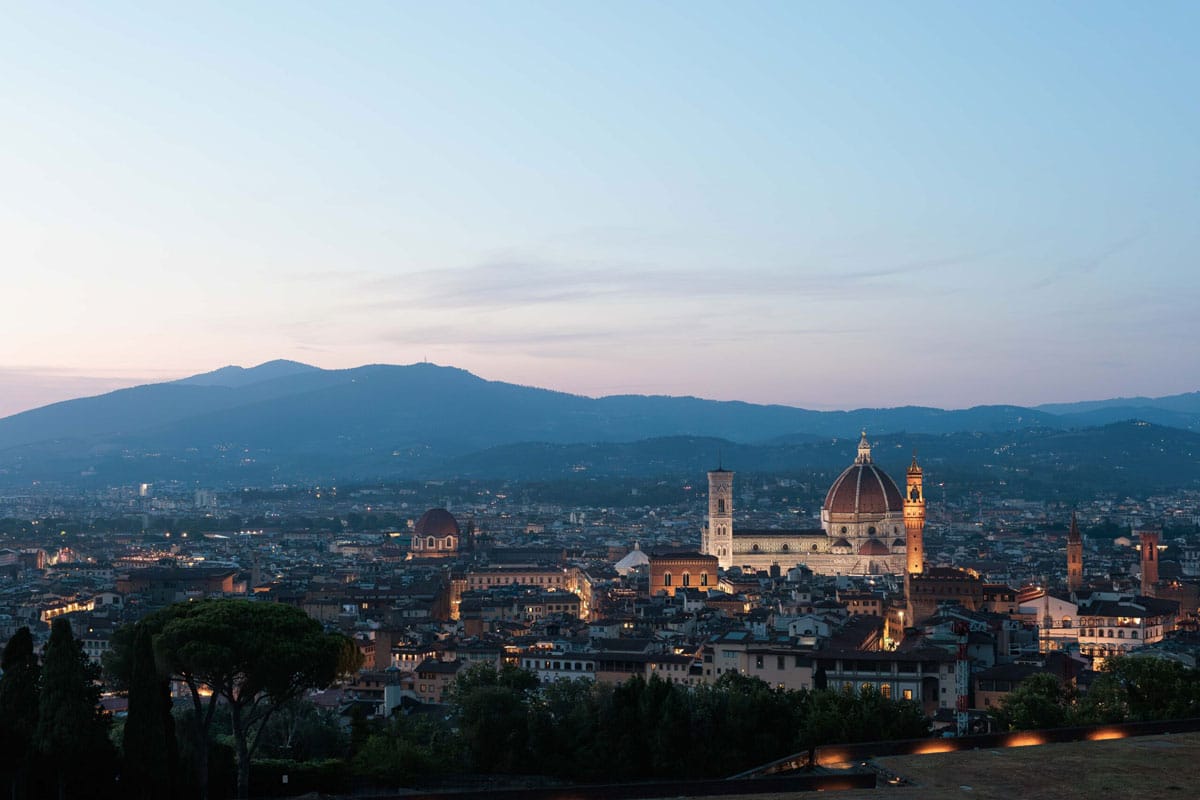
While tourists wait for hours under the Tuscan sun to swarm the Uffizi or elbow their way through the Accademia, some of Florence’s most rewarding destinations quietly sit elsewhere, free or nearly free, blissfully uncrowded and rich with Renaissance art that rivals anything in the city’s famous museums.
This is not “undiscovered Florence.” Locals, scholars, and serious art lovers know about these places. Yet they remain overlooked by the average visitor, bypassed in favor of checklist highlights and Instagram landmarks. What they offer instead is something rarer: space to look, time to think, and a sense of cultural communion rather than consumption.
Here, art is still embedded in daily life, silence sharpens perception, and Florence reveals itself as more than just a museum-city strained by overtourism. Many cost nothing; others require modest planning. All of them reward the traveler who chooses substance over selfies and contemplation over crowds.
Cenacolo di Sant’Apollonia
Andrea del Castagno’s revolutionary Last Supper
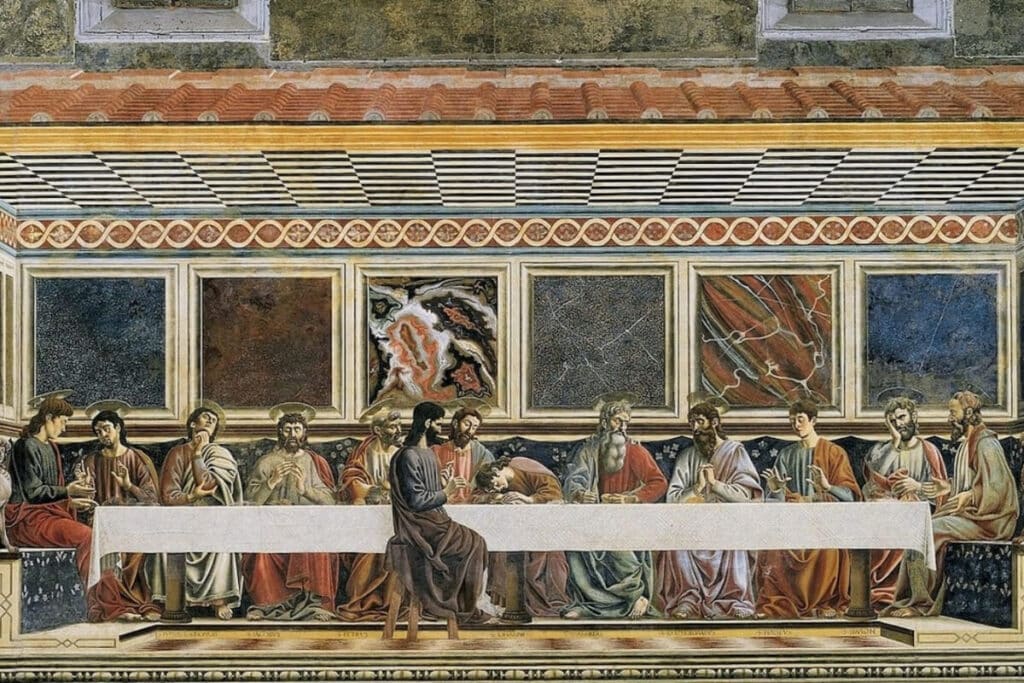
Tucked behind a modest façade near San Marco lies one of the most arresting frescoes of the early Renaissance. Andrea del Castagno’s Last Supper (1447) gives a masterclass in psychological tension. The apostles sit rigidly along a marble bench, each enclosed within a strict architectural grid, while Judas is isolated on the opposite side, his presence ominous and unavoidable.
Castagno’s daring use of perspective and his sculptural treatment of figures mark a turning point in Florentine painting. And yet, despite its importance, the room is often empty. Admission is free. You may well have the fresco entirely to yourself, an almost unimaginable luxury in Florence.
Address: Via Ventisette Aprile, 1
Hours & Cost: Typically open Mon–Sat 8:30–13:50 and selected Sundays; free entry generally, though timed tickets (approx. €5/€2 reduced) available through CoopCulture; booking ahead is recommended.
Website: cenacolo_di_sant_apollonia
Cenacolo di Fuligno
A quieter, gentler Last Supper by Perugino
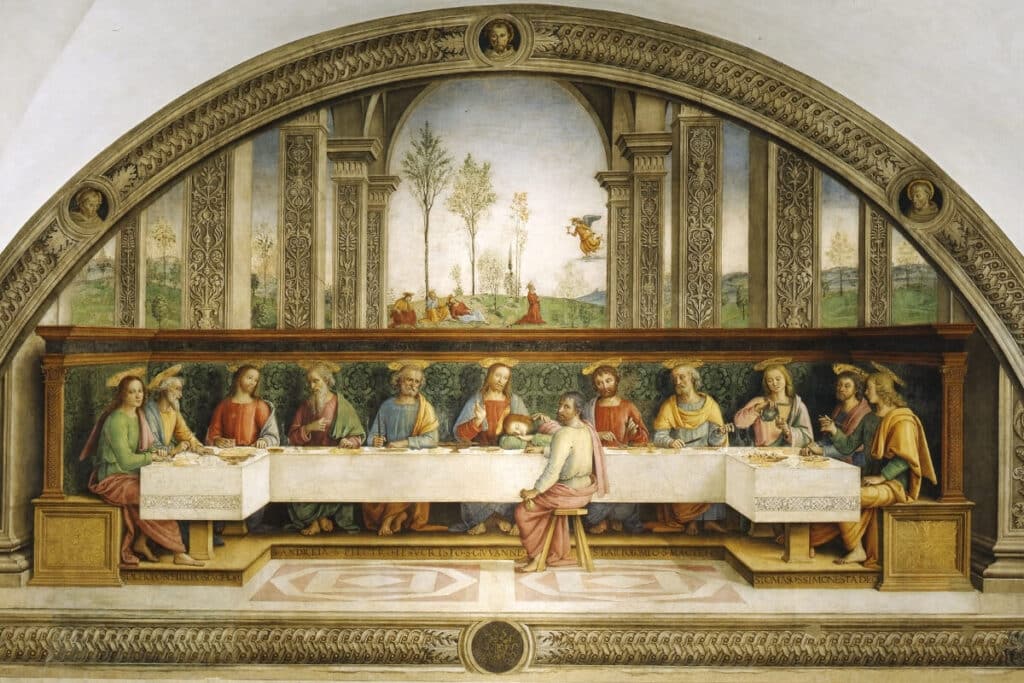
Florence’s tradition of refectory frescoes painted especially for monastic dining halls produced several Last Suppers, each revealing different artistic temperaments. Perugino’s version, near the Santa Maria Novella train station, is the lyrical counterpart to Castagno’s drama.
Painted in the 1490s, it is serene and spacious, suffused with Perugino’s trademark calm and balanced harmony. Christ and the apostles inhabit an airy loggia that opens onto an idealized landscape. The atmosphere invites stillness rather than awe.
Entry is free, the pace unhurried. A perfect first stop for travelers arriving by train and eager to recalibrate their senses.
This refectory last supper fresco is part of the Musei Toscani network and included in listings of Florence cenacoli; use the same regional museum portal as the Sant’Apollonia listing above.
Address: Via Faenza, 40
Hours & Cost: Open Thur–Sat with varied morning/afternoon hours; €5 full / €2 reduced with state museum reductions.
Website: museitoscana.cultura.gov.it
Museo Horne
A Renaissance palazzo brought to life
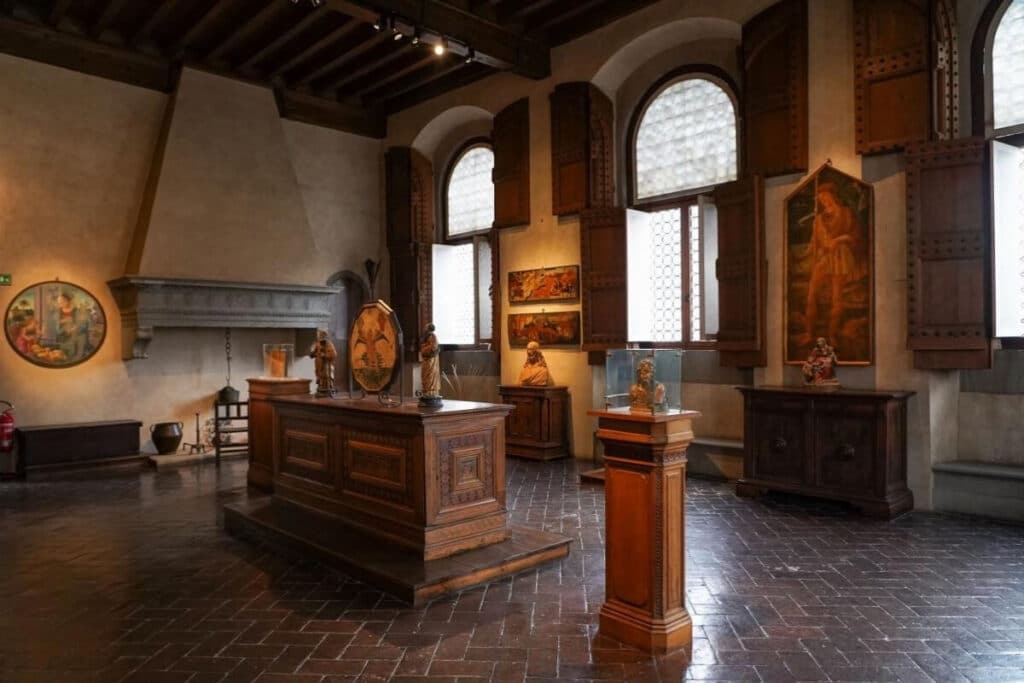
The Museo Horne feels less like a museum and more like a home. English architect and collector Herbert Percy Horne assembled his extraordinary collection in the early 20th century, determined to preserve a Florentine palazzo as it might have existed during the Renaissance.
Paintings, sculpture, furniture, textiles, and everyday objects coexist in domestic rooms, resisting the sterile logic of modern display. Works by Giotto, Simone Martini, and Fra Angelico appear not as trophies but as elements of lived space. The experience is intimate, human-scaled, and revelatory, proof that art once belonged to daily life, not velvet ropes.
Address: Via dei Benci, 6
Hours & Cost: Open Monday–Sunday 10:00–14:00 (closed Wednesdays and holidays); €8 full / €6 reduced; reservations recommended.
Website: museohorne.it
Fondazione Salvatore Romano
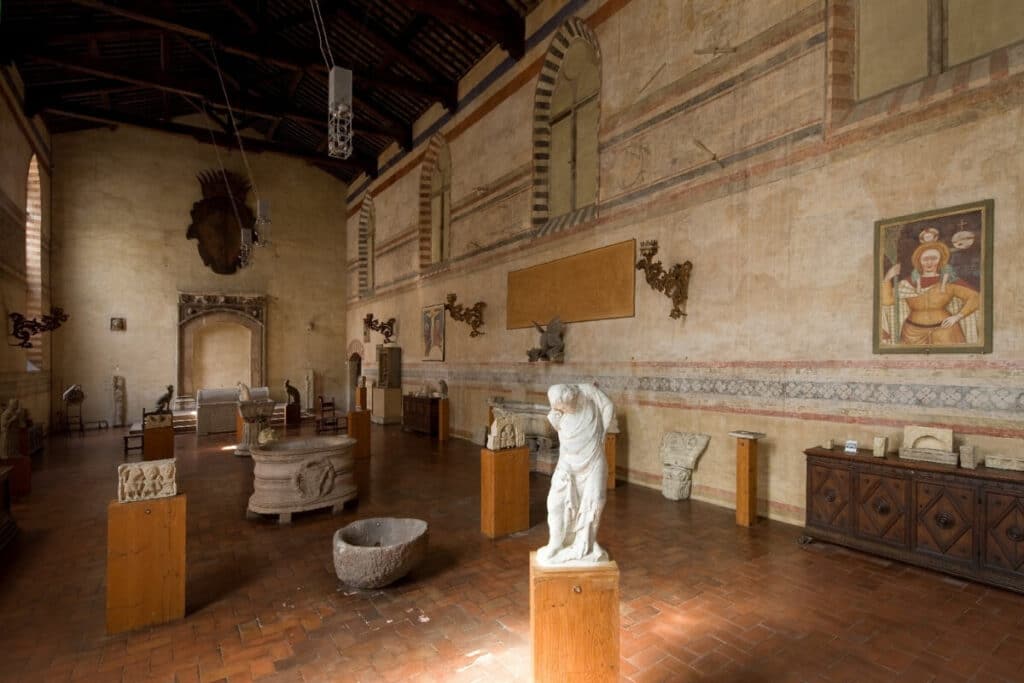
Sculpture awaits in Santo Spirito’s hidden refectory
Most visitors to Santo Spirito barely glance beyond Brunelleschi’s church before drifting off to an aperitivo in the piazza. Few realize that an entirely separate entrance leads to one of Florence’s most atmospheric sculpture collections.
The Fondazione Salvatore Romano occupies the former refectory of the convent, housing Romanesque and Renaissance works arranged with austere elegance. A faded Last Supper fresco lingers on the wall in a spectral witness to centuries of communal meals. The space feels monastic and contemplative, ideal for slow looking—and rarely crowded.
Address: Piazza Santo Spirito 29
Hours & Cost: Mon and Sat from 10am to 5pm; Sun from 1-5pm. Entry fee €5
Website: fondazione-salvatore-romano
Palazzo Martelli
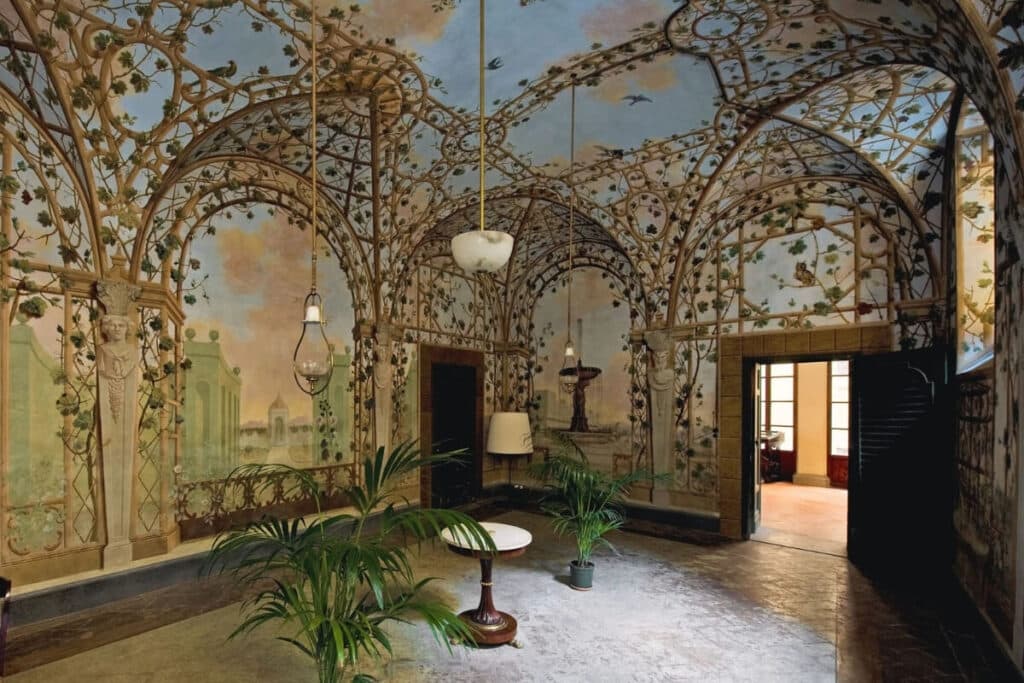
Slip inside a noble Florentine family home
If any locale on this list defines “insider Florence,” it is Palazzo Martelli. Still owned by the Martelli family and opened to the public only recently, the palazzo remains largely intact with original furnishings, family portraits, and masterpieces displayed in situ.
Works by Donatello, Filippo Lippi, and Piero di Cosimo appear not in isolation but as part of a lived aristocratic environment. Visits are by advance booking only in small guided groups. This is not casual sightseeing; it is immersive cultural archaeology, revealing how Florence’s ruling families actually lived with art.
Address: Via Ferdinando Zannetti, 8
Hours & Cost: Tue 1.30pm-6.30pm; Sat 9am-1pm. Free entrance. Booking is required at 055 0649420,
Website: bargellomusei.it/en/museum/casa-martelli/
Chiostro dello Scalzo
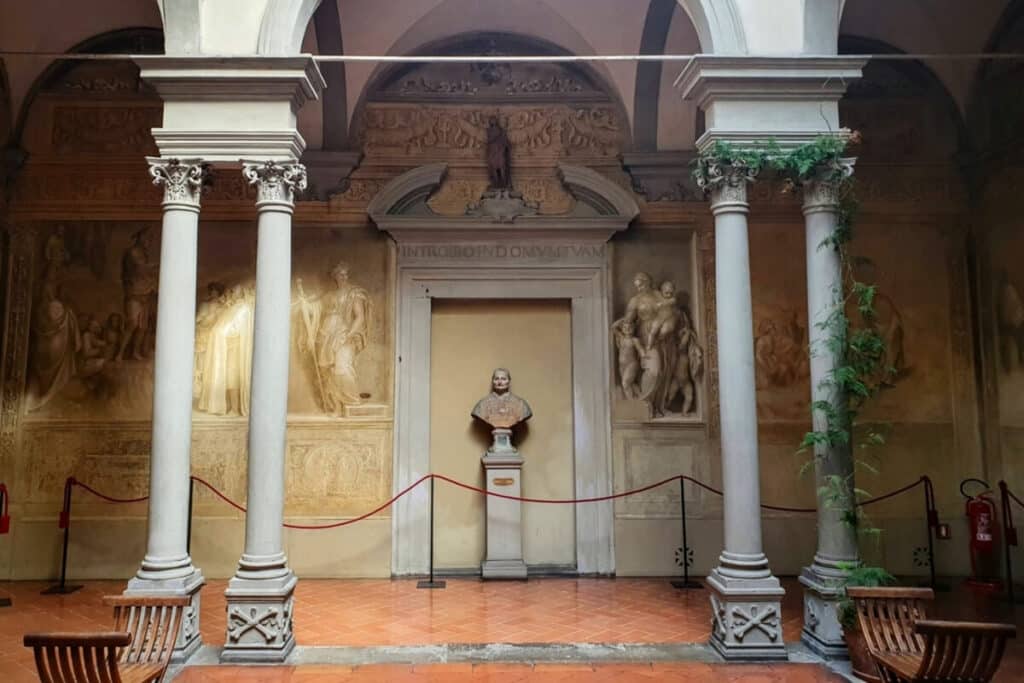
Andrea del Sarto in shades of silence
Andrea del Sarto’s monochrome fresco cycle depicting the life of John the Baptist unfolds in a small, enclosed cloister near Piazza San Marco. Rendered entirely in monochrome grisaille, the scenes imitate sculpture and emphasize volume, gesture, and emotional restraint.
The effect is profoundly meditative. Light shifts across the pale surfaces; footsteps echo in the space. Despite housing some of the artist’s finest work, the cloister is often completely empty. Few places in Florence offer such a distilled encounter with Renaissance humanism.
Address: Via Camillo Cavour, 69
Hours & Cost: Mon – Sat, 1° and 3° Sunday of the month from 8.30am to 1.50pm. Entry fee €5
Website: museitoscana.cultura.gov.it/luoghi_della_cultura
Palazzo Davanzati
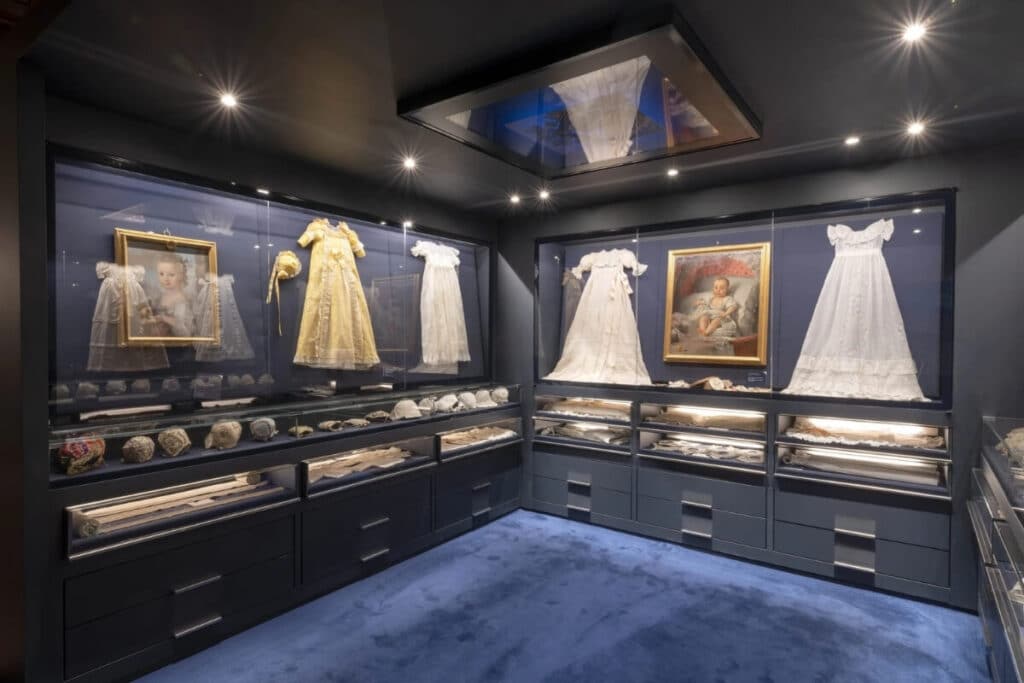
The Renaissance before grandeur
Before Florence became a city of ducal palaces, it was a city of merchants. Palazzo Davanzati, a preserved medieval townhouse, offers a rare glimpse into domestic life between the 14th and 16th centuries.
Rooms retain original frescoes, furniture, and household objects. Kitchens, bedrooms, and storage spaces reveal the rhythms of everyday life—marriage, trade, piety, and survival. This is the anti-palazzo: no spectacle, no excess. It is one of the city’s most illuminating museums and remains surprisingly overlooked.
Address: Via Porta Rossa, 13
Hours & Cost: Tue–Thur, 8.15am-1.50pm; Fri-Sun, 1.15pm-6.50pm; €6 full / €2 reduced, free on some Sundays.
Website: bargellomusei.it (Palazzo Davanzati is part of the Musei del Bargello, click Palazzo Davanzati)
INSPIRATION
The Bargello Museum in Florence
Museo Bardini
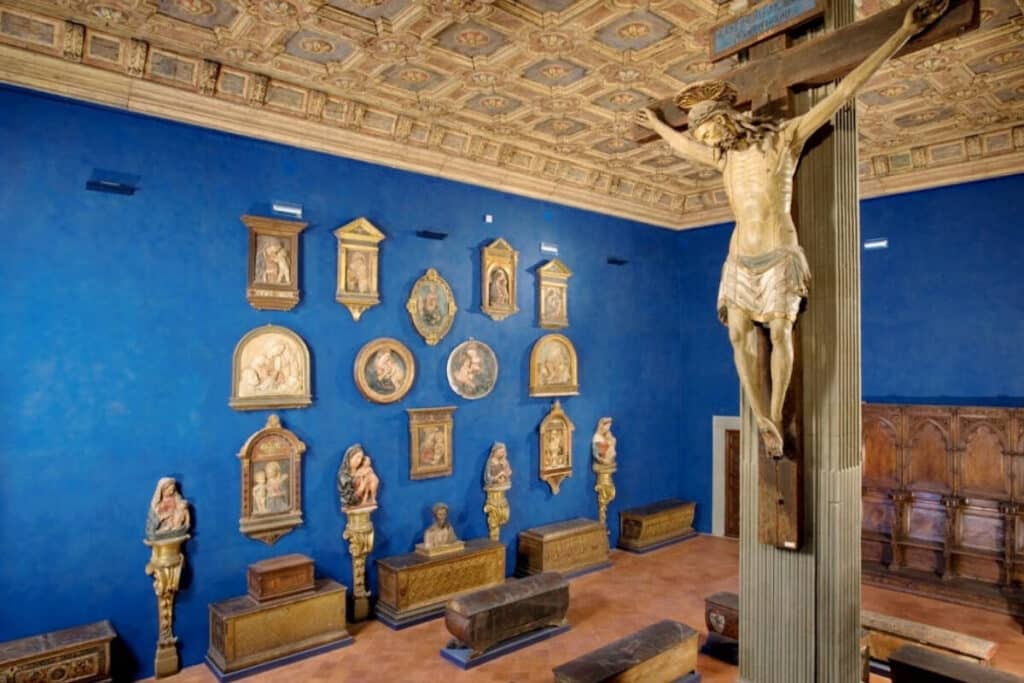
An antiquarian’s eye, a collector’s dream
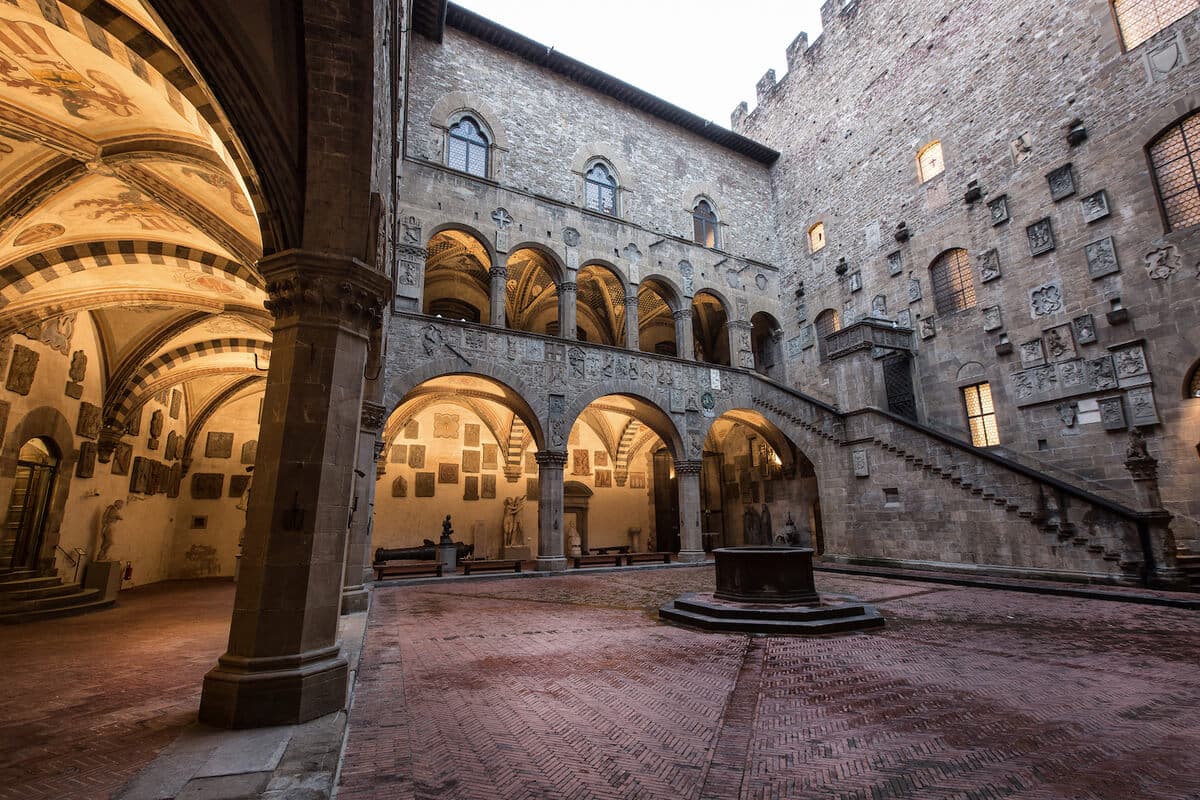
Stefano Bardini, a legendary antiquarian, assembled his collection with theatrical flair and scholarly instinct. His palazzo, washed in an unforgettable deep blue, houses sculptures, paintings, armor, furniture, and fragments arranged not chronologically but aesthetically.
After a long closure, the museum reopened, restored and refreshed, yet remains uncrowded. The rooftop garden offers sweeping views across the Oltrarno, making this both an intellectual and sensory pleasure. The Museo Bardini rewards curiosity with intimate grace.
Address: Costa San Giorgio 2
Hours & Cost: Garden everyday 10am-4pm; Exhibition Tue-Sun 10am-7.30pm. Exhibition and Garden combined ticket €15
Website: villabardini.it
Bobolino Parks
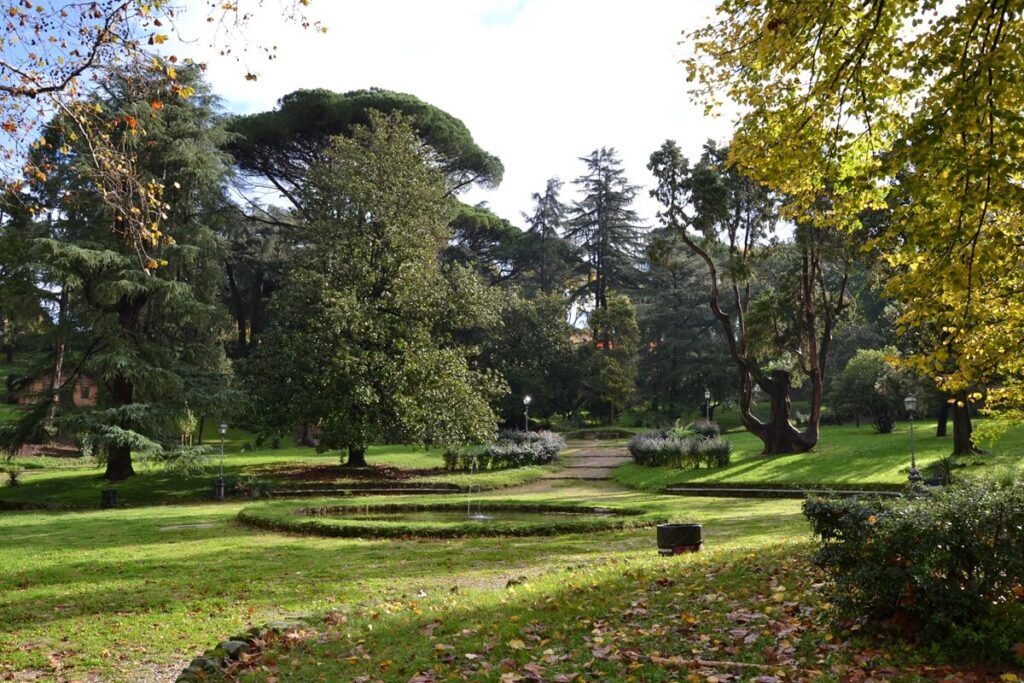
The Public Terraces of Viale Machiavelli
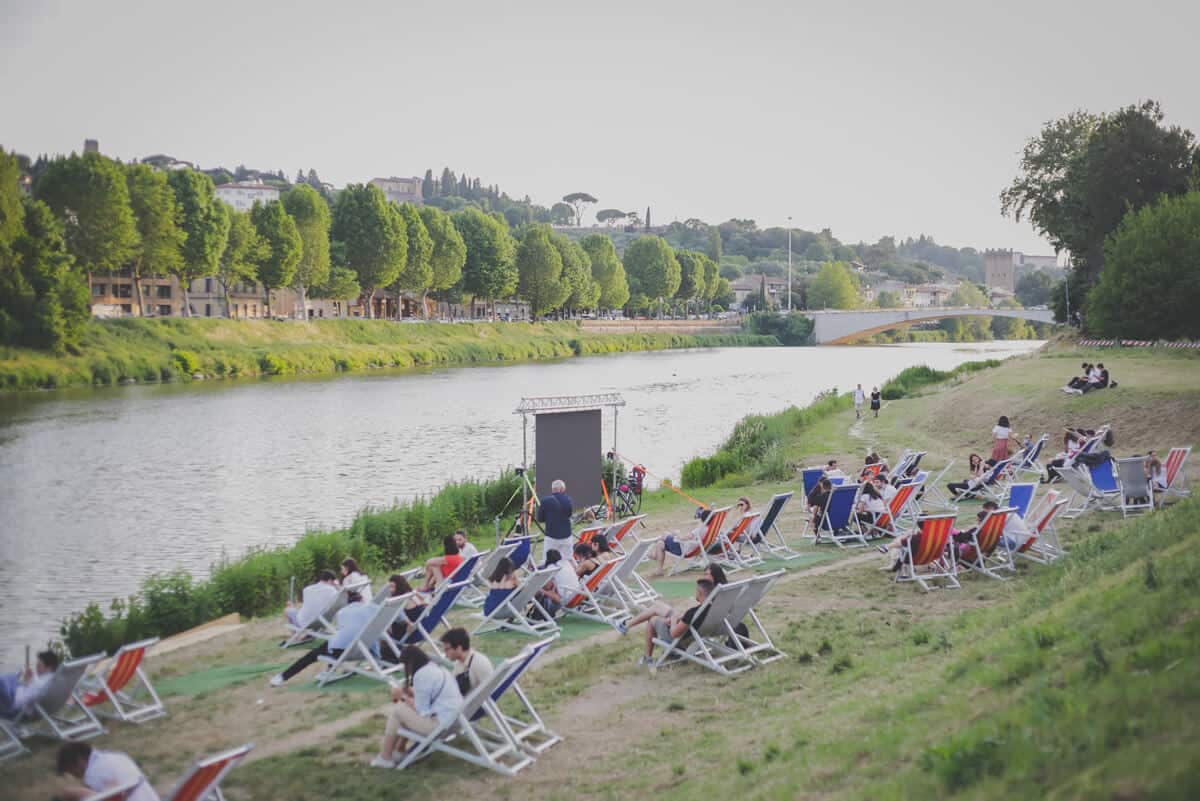
Nestled among the Oltrarno hills awaits the Parco del Bobolino, an English-style park and hidden gem for tranquility seekers. Designed by architect Giuseppe Poggi between 1865 and 1877 as part of the “Viale dei Colli” project, it offers an elegant alternative to the Boboli Gardens.
The park unfolds beyond the medieval walls in three distinct sections along the twists and turns of Viale Machiavelli. The lower garden features lush lawns and a rockwork basin, while the central area showcases a 19th-century botanical collection—including a majestic Incense Cedar—with a large fountain and a lush grotto. The upper section, climbing toward Piazzale Galileo, contains architectural terraces, staircases, and neoclassical towers. Together with the former Royal Stables, Bobolino remains a vital green link in Florence’s urban landscape.
Address: Viale Machiavelli, 18
Hours & Cost: Unlike its more famous namesake, Bobolino offers free admission and is open daily from dawn until dusk, providing a serene alternative for a hillside stroll.
INSPIRATION
The Best Parks in Florence
Forte di Belvedere
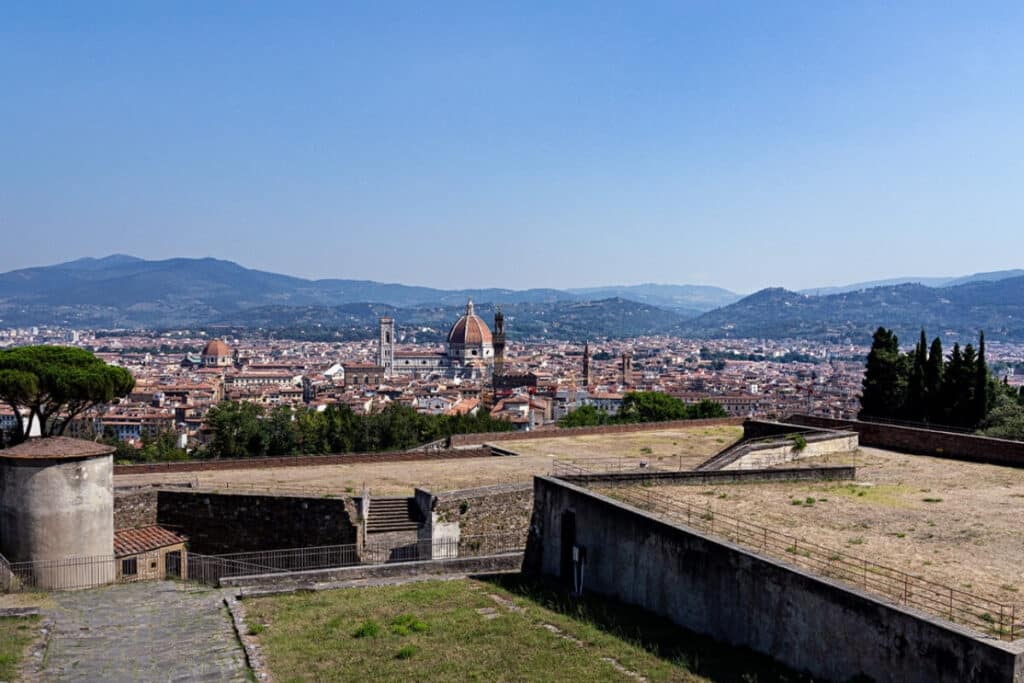
Behold the city at large!
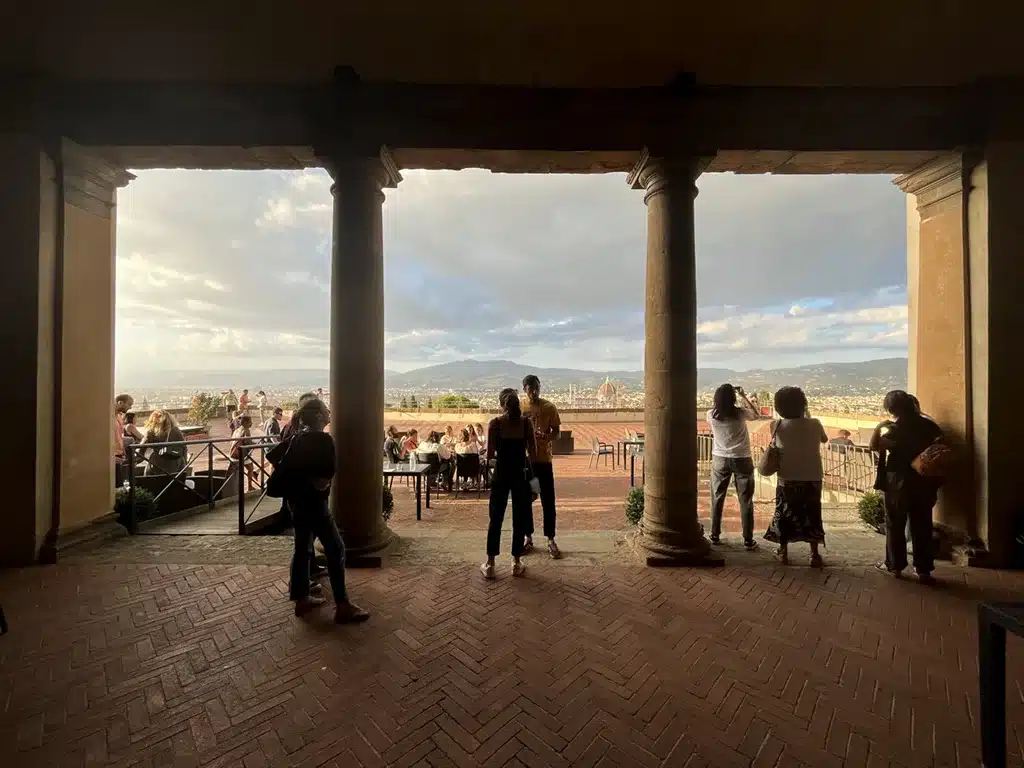
Built in the late 16th century as a Medici fortress, Forte di Belvedere commands a 360-degree panorama that surpasses even Piazzale Michelangelo. Florence unfolds below in the full topographical logic of the Arno, the Duomo, the hills beyond.
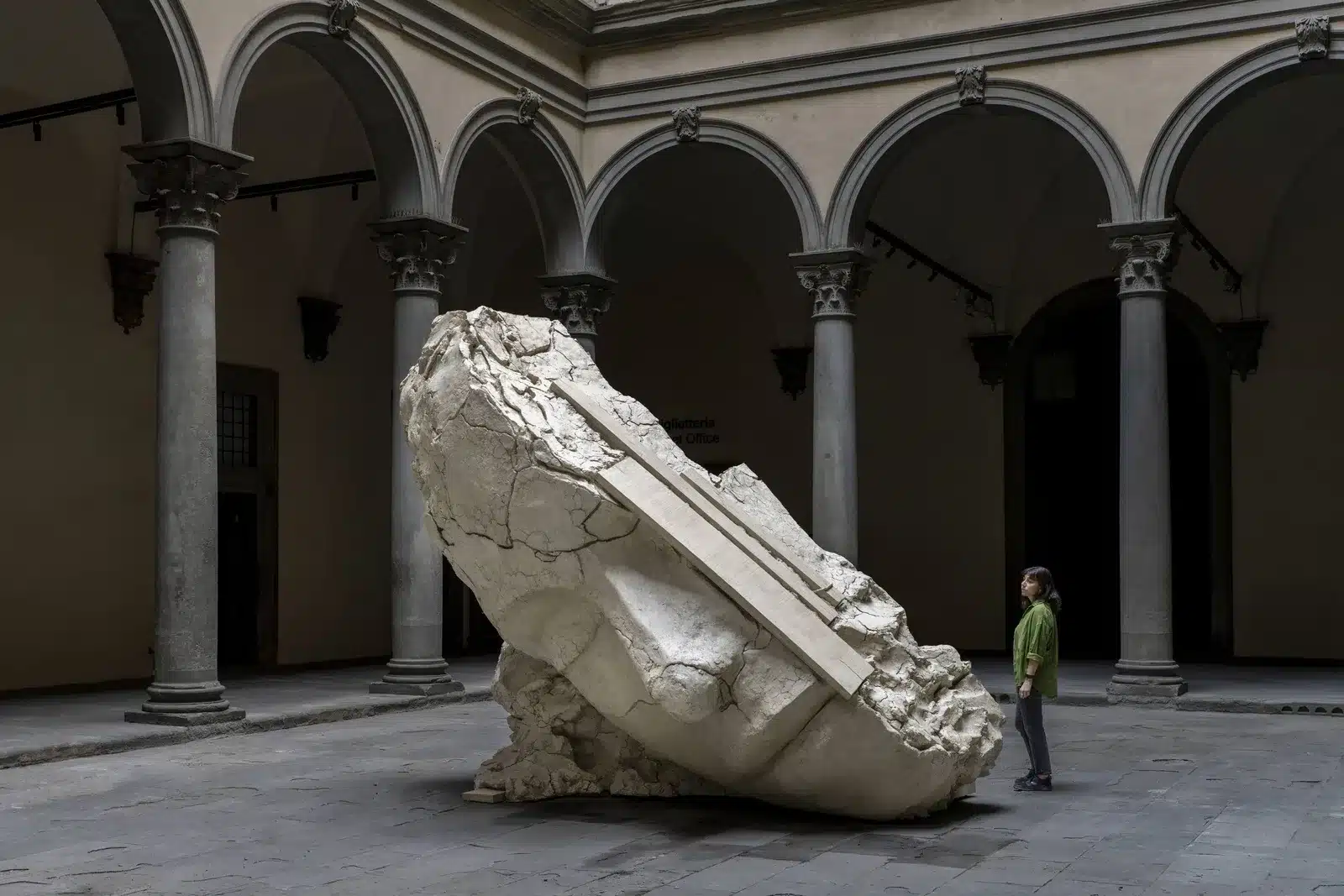
Seasonally open and often hosting contemporary art exhibitions, the fort bridges past and present with ease. Check hours in advance. If you’re able to enter, don’t hesitate. The Belvedere offers one of the city’s most expansive moments of perspective both literally and figuratively.
Address: Via di S.Leonardo, 1
Hours & Cost: Seasonal opening; check ahead for exhibition schedules and access; entry fees vary.
Website: belvederefirenze.it
Why Now
Florence is in a moment of inflection. Tourism has returned with unprecedented intensity, straining both infrastructure and spirit. Yet these quieter sites remind residents and visitors alike that the city still holds space for depth, reflection, and authenticity.
These places are not alternatives to the Uffizi or the Accademia, but complements that restore balance and meaning to the experience of Florence. Many are free or cost under €5. A few, like Palazzo Martelli, require planning. All reward travelers willing to slow down and look carefully.
Far from the queue and the camera lens, the soul of Florence persists in the shadows of quiet corridors and in the private dialogue between a viewer and a work of art. Even now, the greatest gift of the city is not the spectacle, but the solitude.